
How to Clean Gemstone Jewelry: Tips for Tampa Bay Jewelry Lovers
Keeping your jewelry sparkling doesn’t just protect its beauty—it helps preserve its value and longevity. But when it comes to how to clean gemstone jewelry, the truth is that not all gems are created equal. Each stone has unique properties, treatments, and vulnerabilities that require different care.
At Arnold Jewelers in Largo, FL, we’ve been helping customers in Tampa Bay, Largo, Clearwater, and St. Petersburg keep their jewelry looking its best for over 40 years. This guide will help you understand the basics of gemstone care, safe cleaning methods, and when to leave the polishing to professionals.
Quick Facts
-
💎 Different gemstones require different cleaning methods—a one-size-fits-all approach can damage your jewelry.
-
🧼 Many gems are treated or enhanced, which changes how they should be cleaned.
-
🚫 Avoid ultrasonic cleaners and harsh chemicals unless you’re 100% certain your gemstone is safe.
-
📍 Arnold Jewelers offers professional cleaning and polishing services in Tampa Bay.
Know Your Gemstones Before Cleaning
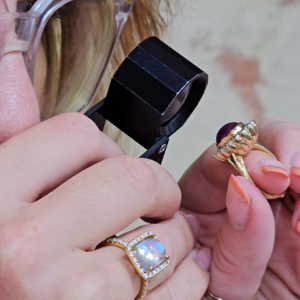
Always correctly identify what stone you’re looking to clean. Diamonds, sapphires, and rubies are hardy (Mohs hardness of 9–10), but softer or porous gems like opals, pearls, or turquoise require special care. Misidentifying a gemstone can mean using the wrong cleaning method and causing irreversible damage.
Gemstone Treatments & Enhancements
Many gemstones on the market are treated to improve their appearance. Heat, dyeing, fracture-filling, and oiling are all common.
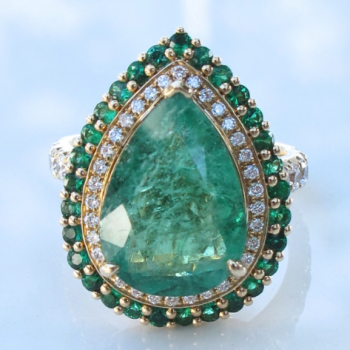
For example:
-
Emeralds are almost always oiled, making them sensitive to ultrasonic cleaning.
-
Rubies and sapphires are often heat-treated and generally safe to clean at home.
-
Topaz can be treated with irradiation—be cautious with prolonged sun exposure.
Knowing whether your gem has been treated helps you avoid cleaning methods that might weaken or dull it.
At-Home Gem Cleaning Tips (Popular Gemstones Breakdown)
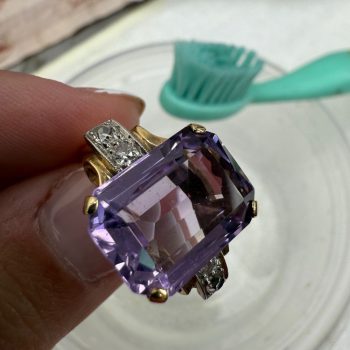
Here’s how to care for the most popular gemstones safely at home:
-
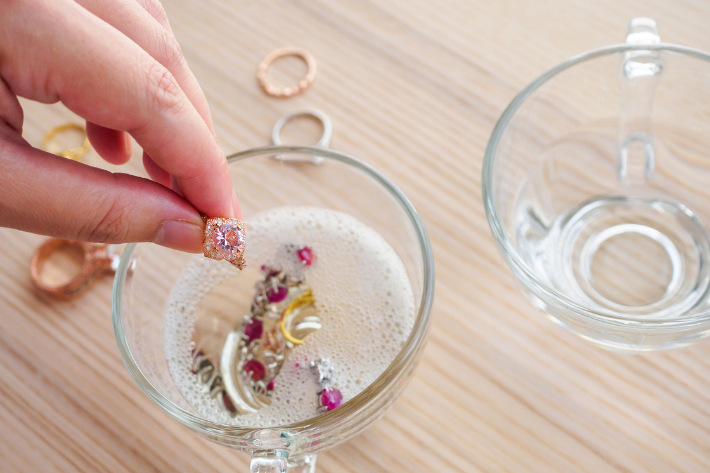
Diamonds: Soak in warm water with mild dish soap, then gently scrub with a soft brush.
-
Sapphires & Rubies: Durable and safe to clean with mild soap and water.
-
Emeralds: Wipe with a damp cloth; avoid ultrasonic cleaners due to oiling.
-
Opals: Use a damp, soft cloth; never soak or use heat.
-
Pearls: Wipe after each wear with a soft cloth. Never soak—water can weaken the silk thread.
-
Turquoise & Lapis Lazuli: Porous stones; wipe gently with a damp cloth only.
💎 Gems That Can Usually* Go in an Ultrasonic Cleaner
*(Only if untreated and free of fractures or inclusions)
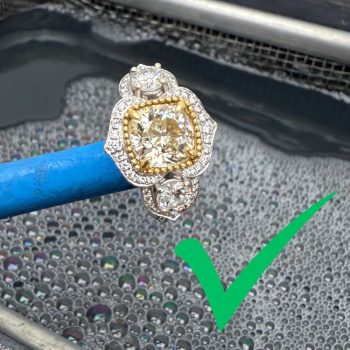
These gemstones are hard and durable (Mohs 8 or higher):
-
Diamond (unless fracture-filled or coated)
-
Ruby (natural and heat-treated only)
-
Sapphire (natural and heat-treated only)
-
Spinel
-
Chrysoberyl (including Alexandrite)
-
Topaz (use caution—avoid if coated or heavily included)
⚠️ Gems That Should Never Go in an Ultrasonic Cleaner
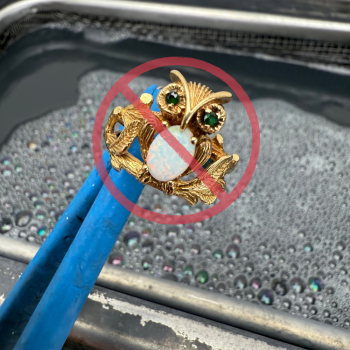
These stones are porous, brittle, soft, or often treated, and can fracture, fade, or lose luster in ultrasonics:
-
Emerald (usually oiled or fracture-filled)
- Amethyst (fractures; gem discoloration)
-
Opal (porous; can crack)
-
Pearl (organic; can lose nacre)
-
Turquoise (porous; often stabilized)
-
Lapis Lazuli (porous and dyed)
-
Malachite (porous; can pit)
-
Amber (soft organic resin)
-
Coral (organic; soft)
-
Moonstone (can cleave easily)
-
Tanzanite (cleavage risk)
-
Peridot (brittle; inclusions may cause fractures)
-
Garnet (generally stable but avoid if heavily included)
-
Tourmaline (can crack from vibration)
-
Zircon (heat-sensitive and brittle)
Cleaning vs. Cleaning and Polishing
It’s important to distinguish cleaning from cleaning and polishing.
-
Cleaning removes surface dirt, oils, and residue from the gemstone and setting—something you can often do at home with mild soap, warm water, and a soft cloth.
-
Polishing is a professional service that restores the luster of the metal, buffs away scratches, and ensures stones remain secure in their settings.
At Arnold Jewelers in Largo, we recommend routine at-home cleaning paired with professional cleaning and polishing once or twice a year. This combination keeps your jewelry hygienic and safe while maintaining its brilliance and structural integrity.
Caring for Gems: Dos and Don’ts
Do:
-
Store jewelry pieces separately to avoid scratches.
-
Wipe jewelry after each wear to remove oils.
-
Clean gently and regularly to prevent buildup.
Don’t:
-
Use chlorine, bleach, or harsh household cleaners.
- Pile jewelry together. Stones like opals and pearls scratch easily.
-
Place treated, soft, or porous gems in ultrasonic cleaners.
-
Leave gems like amethyst, kunzite, or topaz in prolonged direct sunlight.
When to Seek Professional Cleaning
Not every gemstone should be cleaned at home. Antique, fragile, or heavily treated gems should always be entrusted to professionals. Beyond cleaning, jewelers can:
-
Inspect for loose prongs and settings.
-
Check for chips, cracks, or wear.
-
Restore brilliance through professional polishing.
📍 At Arnold Jewelers in Tampa Bay, we provide full-service professional cleaning and inspections to keep your jewelry safe and beautiful for generations.
Cleaning Gemstone Jewelry in Tampa Bay
Caring for your gemstone jewelry is about more than sparkle—it’s about protecting your investment and preserving memories. With at-home cleaning, an understanding of your gemstone, and occasional professional polishing, your jewelry will continue to shine for years to come.
👉 Visit Arnold Jewelers in Largo, FL for expert jewelry cleaning, polishing, and inspections. Serving Tampa Bay, Clearwater, and St. Petersburg with trusted care for over 40 years.
Looking to clean your jewelry?
- Categories: